"We had to be “Santa Claus” ourselves this season, for cakes, apples, a little candy, & some picture books were all that could be procured for the children. We had to tell them Santa Claus couldn’t get thro’ the pickets."
Unvanquished: Confederate Women in the Civil War
xxxx
Saturday, January 3, 2026
Civil War Confederate Christmas Celebrations
"We had to be “Santa Claus” ourselves this season, for cakes, apples, a little candy, & some picture books were all that could be procured for the children. We had to tell them Santa Claus couldn’t get thro’ the pickets."
Wednesday, May 21, 2025
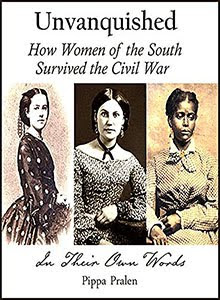
Book: Unvanquished: How Confederate Women Survived the Civil War
Brave southern women tell how they survived the desperate last days of the Confederacy in eyewitness accounts. They outwitted the plundering Yankees and fed starving children. Includes accounts of slave women.
Click here:
Monday, May 12, 2025
Civil War: Starvation Descends Upon the South
Starvation loomed as a stark possibility for many Southern women. Desperate women, trying to feed hungry children resorted to robbery.
"To be hungry is there an everyday occurrence. For ten days, ...lived off just hominy enough to keep their bodies and souls from parting, without being able to procure another article; not even a potato... I am satisfied that two months more of danger, difficulties, perplexities, and starvation will lay her (Mother) in her grave. "~ Sarah Morgan, Louisiana
In the town of Salisbury, North Carolina in March 1863, a group of 75 women armed with axes and hatchets descended upon the railroad depot and local stores, desperate for food. The women thought that the railroad agent and the store owners were hoarding flour, to sell later at a higher price. When faced with the angry mob, the storekeepers reluctantly gave flour, molasses, and salt to the women.
Richmond, Virginia - Bread Riot
In April 1863, a “mob of women” desperate with hunger, marched up Main Street, entered the stores of the suspected speculators and emptied them of their contents.
Eventually Jefferson Davis appeared, spoke to the crowd, and calmed the women who left, reluctantly, with their stolen baked goods.
Yankee marauders made the situation worse. Luckily, two factors saved the Confederate families: 1) the local southerners knew the land and hid food and livestock, 2) Yankees thought sweet potatoes were weeds and overlooked them, when they plundered.
Click below to read more:
Sunday, March 30, 2025
Food of a Civil War Soldier
The soldiers gathered in small groups each evening to prepare their food. The food was low quality for both armies, but the Confederate soldier suffered more from lack of food. For soldiers of the North, some food was obtained by plunder. When food deliveries were interrupted by weather delays or other challenges, soldiers were forced to forage the countryside to supplement their meager diets.
Many Southern soldiers simply cooked cornmeal mush around a rifle ramrod. They took the cornmeal and swirled it around in grease, making a dough. They then wrapped the dough around their rifle ramrod and cooked it over the campfire. That was called "sloosh".
Corn Pone
Corn pone was a staple of early settlers and Civil War soldiers.
1 tablespoon salt
2-3 cups of very hot (not boiling) water
1/4--1/2 cup bacon grease or other oil

Oatmeal pie recipe:
Idiot's Delight cake recipe:
An easy dessert to make, "Idiot's Delight" cake was quick and frugal. It was often served on Christmas and Holidays.
To learn more Civil War food recipes and learn the history of survival of women in the south...
Click here:
Brave southern women tell how they survived the desperate last days of the Confederacy in eyewitness accounts. They outwitted the plundering Yankees and fed starving children. Includes accounts of slave women. Civil War food recipes: cabbage stew, hoppin' John, oatmeal pie, Johnny cakes, molasses cookies etc.
Friday, April 19, 2024
Civil War: Buried Treasure
Ex Slave Finds Buried Treasure
With the newly found wealth, Martha’s Mother bought 2 lots of land. They continued to present a humble appearance and work as sharecroppers, but they also built a house for the family and a cottage they rented out. Martha was eternally grateful for this money which allowed her family to escape from debt and to find some relief from their hard toil. Their lives were completely changed.
Source: Federal Writers' Project: Slave Narrative Project, Vol. 14, South Carolina, Part 4, Raines-Young
Click below to read more:
Monday, January 16, 2023
Returning Defeated Soldiers

Mary Ann Harris Gay describes the family reunion with her returning Confederate soldier brother:
"As we stood upon the platform of the Decatur depot, and saw him step from the train ... our hearts were filled with consternation and pity, and tears unbidden coursed down our cheeks, as we looked upon the brave and gallant brother, who had now given three years of his early manhood to a cause rendered dear by inheritance and the highest principles of patriotism, and, in doing so, had himself become a physical wreck.He was lean to emaciation, and in his pale face was not a suggestion of the ruddy color he had carried away. A constant cough, which he tried in vain to repress, betrayed the deep inroads which prison life had made upon his system."
These young, handsome boys that had gone to war came back changed.9
READ MORE about women and the Civil War, read eyewitness accounts. Available on Amazon.com Kindle ebooks. Click below:Monday, March 23, 2020
Epidemics, Pandemics, Infectious Diseases of the American Civil War
"Government inaction or delay have shaped the course of many infectious disease outbreaks in our country, including the American Civil War.
There were smallpox epidemics among civilians, although a vaccine existed. Smallpox exploded at this time not because of a lack of protocols or knowledge—a vaccine even existed—but because political leaders simply didn’t care about the group that was getting sick. Government inaction or delay—due to racial discrimination, homophobia, stigma, and apathy—have shaped the course of many epidemics in our country. (Jim Downs, The Epidemics America Got Wrong, The Atlantic Magazine, Mar 22, 2020)
When the first cases of smallpox broke out among troops during the Civil War, military officials—on the Union and Confederate sides alike—immediately quarantined the infected in a tent or a makeshift hospital to prevent the transmission of the virus. But when smallpox began spreading among formerly enslaved people, officials either ignored it or argued that the virus spread viciously among black people because of racial inferiority and unsanitary habits.
In the months after President Lincoln had issued the Emancipation Proclamation in January of 1863, no infrastructure was in place to provide new freed people with basic necessities, let alone to combat a deadly virus. Mortality rates increased. In the face of a widespread epidemic, the people had to help themselves in order to survive. Harriet Jacobs, a formerly enslaved woman who had escaped to the North but returned to the South to help, wrote to charitable groups and asked them to immediately send clothing, blankets, and other resources. With the money Northern benevolent associations sent, Jacobs, with the eventual assistance of the military, constructed a makeshift hospital for freedpeople.
READ MORE about women and the Civil War. Eyewitness accounts: